


Do Compression Shorts Help With Chafing — and Do You Need Them?
Part of the Dress Comfort Knowledge Lab by Trendyvice
Yes, compression shorts help with chafing — but not because they squeeze. They work because they cover the inner thighs and stop skin from rubbing against skin. The fabric barrier does the work, not the compression.
That means you do not need compression to stop chafing. Under a dress, a thin lace thigh band or a lightweight slip short creates the same barrier with far less heat, which matters most on long, hot American summer days.
What Actually Causes Thigh Chafing
Thigh chafing happens when bare inner thigh skin rubs repeatedly against bare inner thigh skin. The friction generates heat. With sweat and moisture present, the skin surface softens and becomes more vulnerable to irritation.
The solution to that problem is to stop the two skin surfaces from making contact. A physical barrier — any barrier — achieves this. The barrier does not need to grip, squeeze, or compress to do its job.
Compression shapewear became associated with chafing prevention mainly because it was the most widely available garment that extended below the hip. But the compression itself was never the active ingredient.
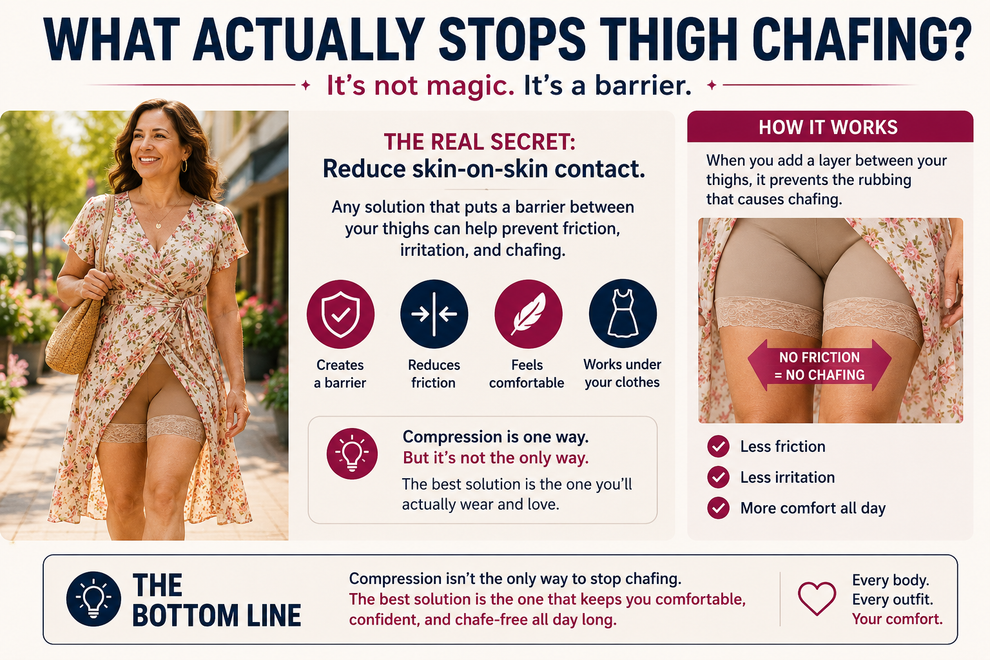
Compression vs. Barrier: What the Difference Means
| Feature | Compression Garment | Non-Compression Barrier |
|---|---|---|
| How it works | Squeezes and holds body tissue | Creates fabric layer between skin surfaces |
| Stops chafing | Yes — as a side effect of coverage | Yes — as the primary function |
| Heat in warm weather | High — adds full fabric layer under pressure | Low to moderate depending on garment |
| Comfort over long days | Can feel restrictive after several hours | Designed for all-day wear |
| Bulk under fitted dresses | Noticeable in lightweight or fitted styles | Minimal with thigh bands, moderate with shorts |
| Primary purpose | Shaping and smoothing | Friction prevention |
Why Some Women Use Compression Anyway
Shapewear and compression shorts entered many women's routines before purpose-built anti-chafing products were widely available. They worked — not because of the compression, but because they covered the skin.
Some women also value the smoothing effect compression provides under formal dresses or fitted silhouettes, and many wear compression shorts for running or gym workouts, where a snug fit keeps fabric from shifting during exercise. In those cases, the compression serves a purpose beyond chafing prevention.
There is nothing wrong with using compression if it suits you. But it is not the mechanism that stops chafing, and it comes with tradeoffs — particularly heat — that non-compression alternatives avoid.
What Works Without Compression
There are two main non-compression options that reliably prevent thigh chafing under dresses. Before the product options below, here is a free resource that covers every prevention method.
The Dress Comfort Guide
A free, plain-language guide to staying comfortable in dresses through heat, long walks, and warm-weather events — the fabrics, habits, and barriers that keep friction off your skin. Sent straight to your inbox.
No spam. Unsubscribe anytime.
Anti-chafing thigh bands sit at the top of the inner thigh and prevent skin-to-skin contact at the point where friction begins. They do not extend down the leg, add minimal fabric, and allow full airflow. They are held in place by silicone grip rather than by squeezing the body — the lightest way to stop chafing without any compression at all.
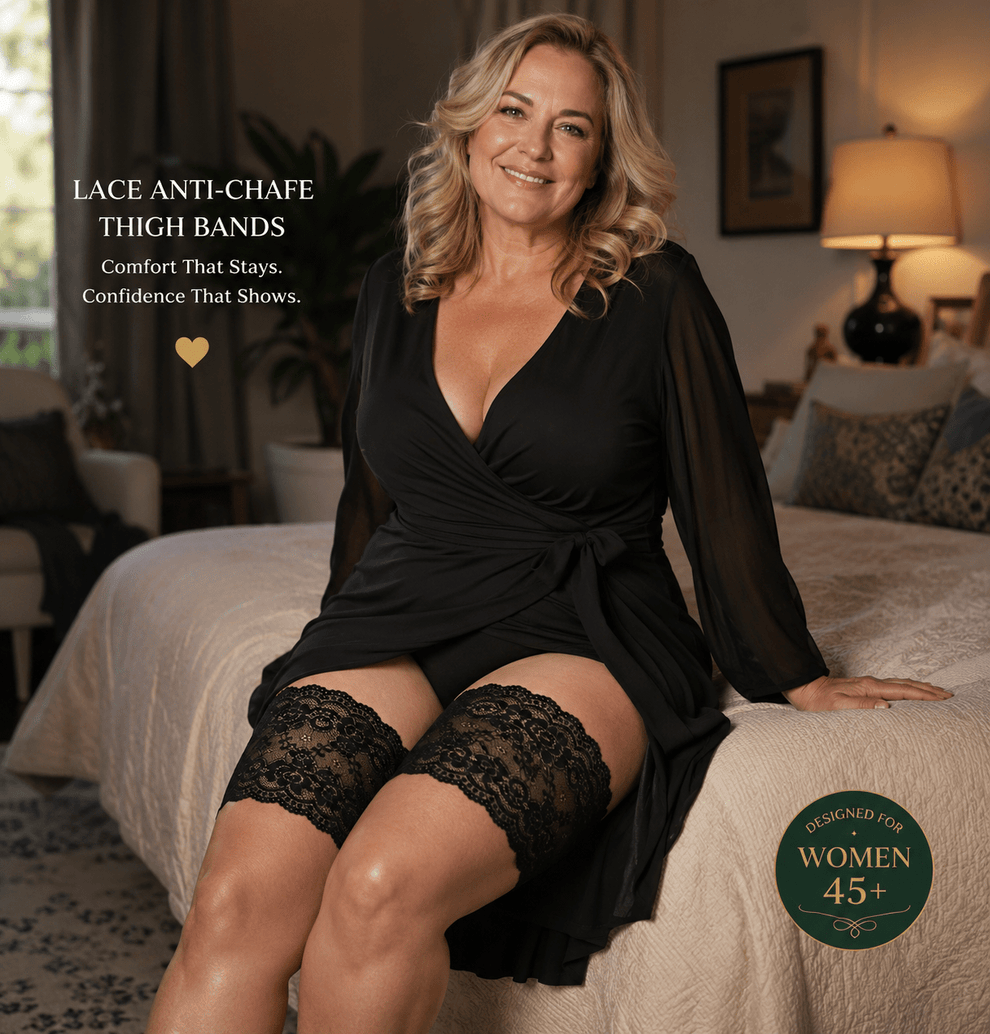
Lace Anti-Chafe Thigh Bands
A light lace band held in place by silicone grip, not compression — it covers only where the thighs touch, adds almost no fabric, and lets air move freely on hot days. Sizes S to F fit upper thighs from 14.2 to 30.7 inches.
Shop Lace Anti-Chafe Thigh BandsAnd if the size isn't right, you keep the original pair and we send a replacement free — so a first try carries no risk.
Lightweight slip shorts are another option that works without any compression. A pair like the Anti-Chafe Slip Shorts covers from the hip to mid-thigh, stays put on a comfortable waistband rather than by squeezing, and adds a modest coverage function on top of friction prevention.
Both options work well for everyday dress wearing, long outdoor events, summer weddings, travel, and hot weather — precisely the situations where compression garments can feel heaviest.
When Compression Might Still Make Sense
Good Fit For
Compression
Women who want a smoothing or shaping effect under fitted dresses, and who are comfortable with a fuller garment. Works best in cooler conditions or shorter events.
Good Fit For
Non-Compression Barrier
Women who want targeted friction prevention with less fabric, more airflow, and no body-shaping element. Works well in hot weather, under lightweight dresses, and over long days.
The right choice depends on what you want from the garment. If chafing prevention is the only goal, compression is not necessary.
Frequently Asked Questions
Do compression shorts help with chafing?
Yes. Compression shorts help with chafing because they cover the inner thighs and stop skin from rubbing against skin. The squeeze itself is not what prevents chafing — the fabric barrier is. A non-compression barrier such as thigh bands or lightweight slip shorts gives the same protection with less heat.
Does compression stop thigh chafing?
It can, but not because of the compression itself. Compression garments stop chafing because they cover the inner thigh skin and prevent skin-on-skin contact. The same result can be achieved without compression using thigh bands or lightweight slip shorts.
Are Spanx or shapewear necessary for chafing?
No. Shapewear and Spanx were never designed specifically for chafing prevention. They work as a barrier, but they add significant heat and bulk. Purpose-built anti-chafing products achieve the same friction prevention with less weight and better airflow.
What is the lightest way to prevent chafing under a dress?
Anti-chafing thigh bands are the lightest option. They cover only the area where friction occurs, add minimal fabric, and have no waistband. They are particularly effective in hot weather when reducing any extra fabric layer matters.
Do I need tight shorts under my dress to stop chafing?
No. Shorts do not need to be tight to prevent chafing. They need to stay in position and keep the inner thigh skin covered. Lightweight slip shorts with a comfortable waistband achieve this without any compression or squeezing of the body.
Is compression uncomfortable in hot weather?
Many women find compression garments uncomfortable during hot weather or long outdoor events. The pressure and additional fabric layer can trap heat, particularly around the hip and upper thigh. Non-compression alternatives are generally cooler and more comfortable over extended periods in warm conditions.