


The Best Solution for Chub Rub
Part of the Dress Comfort Knowledge Lab by Trendyvice
The best solution for chub rub is a smooth, breathable barrier worn where the inner thighs touch — most reliably a pair of anti-chafe thigh bands or slip shorts. Both stop the skin from rubbing directly against itself, which is the real cause of chub rub, and both keep working through heat and a long day. Creams and powders help briefly but wear off with sweat. For lasting protection across walking, dancing, and warm-weather events, a fabric barrier is the most dependable fix.
What Actually Solves Chub Rub
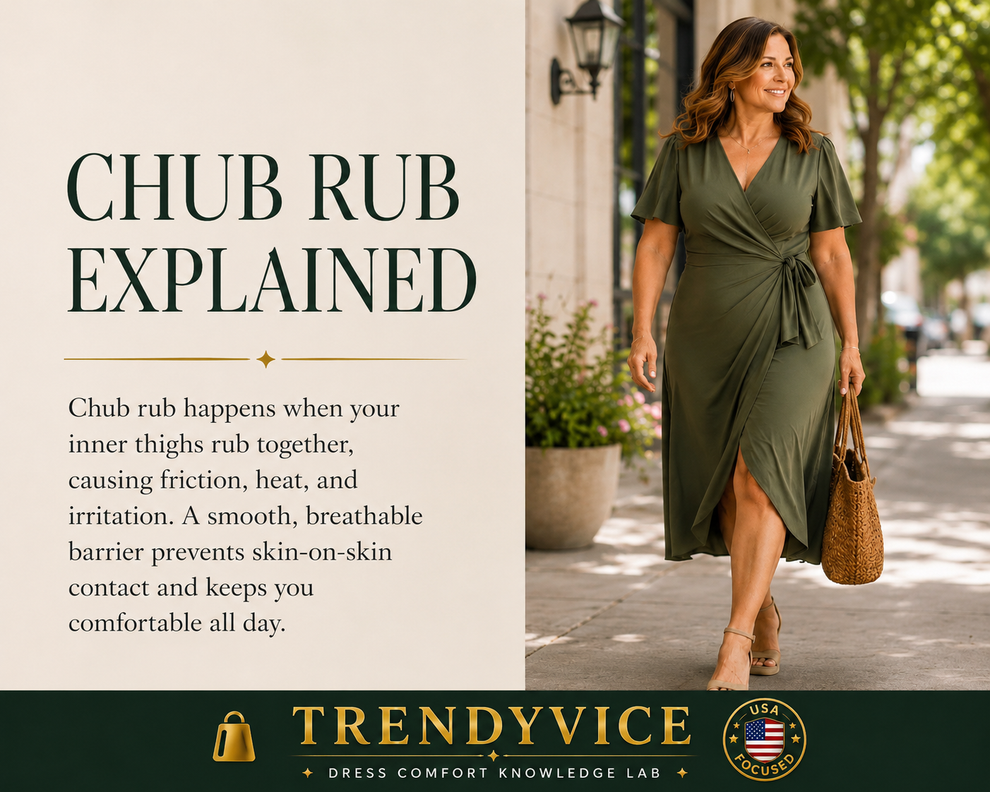
Chub rub — the stinging, raw irritation on the inner thighs after a long day — comes from one thing: skin rubbing against skin. Any real solution has to interrupt that contact, and the options that do it best are the ones that put a smooth layer between the thighs and keep it there.
That rules in a small set of dependable fixes and rules out the ones that only work for an hour. The most reliable solutions are thigh bands and slip shorts, because they physically block the contact and stay in place through movement and sweat. Creams, powders, and gels can reduce friction temporarily, but they break down as the day goes on. If you want a fuller background on the problem itself, the guide to what chub rub is covers the causes and symptoms in detail.
Why This Happens
Chub rub is friction. When you walk, the inner thighs make contact and slide against each other stride after stride, and over a long day that repeated rubbing wears down the skin's surface until it stings and reddens. Heat and sweat accelerate it, because damp skin grips harder than dry skin and drives the friction higher with every step.
This is why a fabric barrier outperforms a cream. A barrier removes the skin-on-skin contact entirely — the friction now acts on smooth material instead of bare skin — and it doesn't wash away with sweat. Lace Anti-Chafe Thigh Bands wrap each thigh and cover only the contact zone, staying breathable in heat, while Anti-Chafe Slip Shorts cover the full upper thigh for women who prefer more coverage. Both attack the actual mechanism, which is why they last where a topical layer fades.
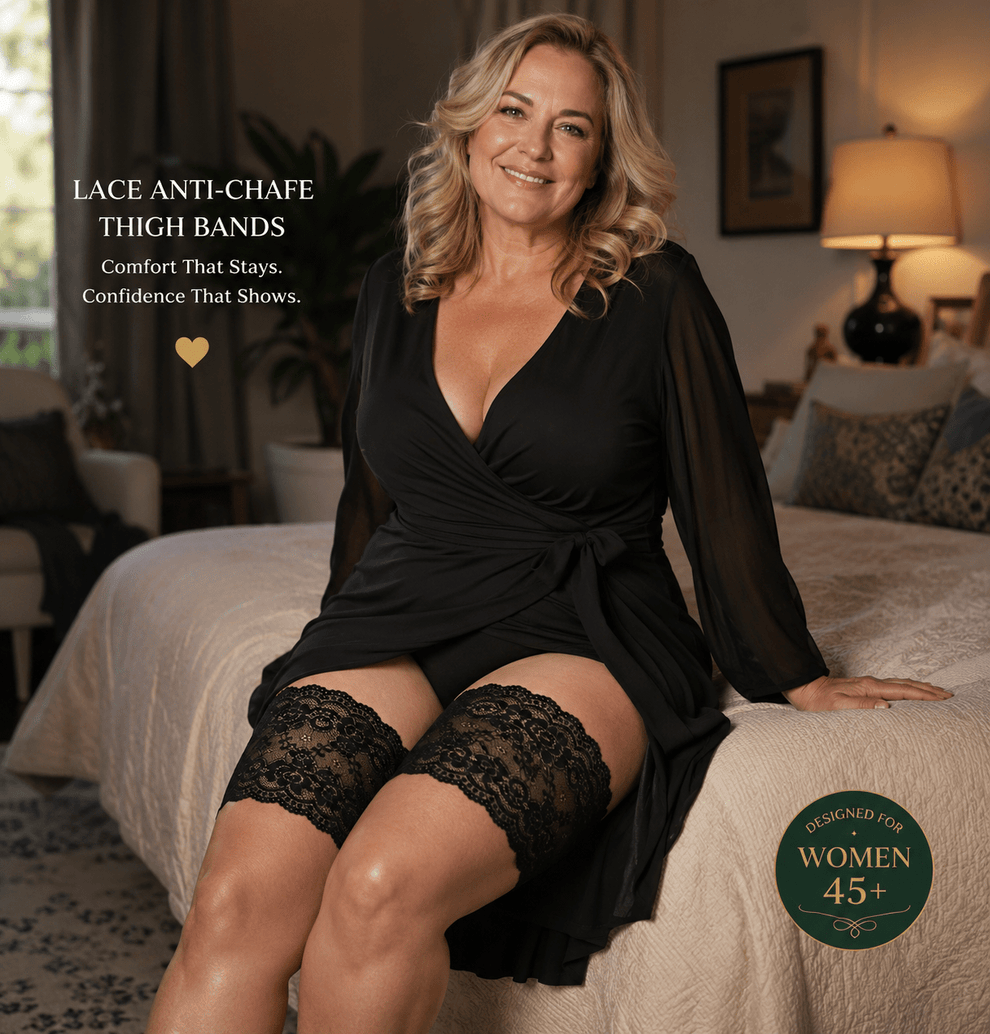
Lace Anti-Chafe Thigh Bands
A breathable lace band that wraps each thigh and covers only the contact zone — stopping chub rub at its source and staying put through heat, walking, and a full day out.
Shop Lace Anti-Chafe Thigh BandsAnd if the size isn't right, you keep the original pair and we send a replacement free — so a first try carries no risk.
The broader prevention picture is laid out in the guide on how to stop thigh chafing when wearing dresses.
Get the free Dress Comfort Guide
The simple, practical steps for walking through a long, warm day without the rubbing — sent straight to your inbox, free. Everything on this page and more, in one place you can keep.
Free to join. Unsubscribe anytime.
The Options, Ranked by How Long They Last
Every chub rub solution works by reducing friction, but they differ enormously in how long that protection holds up across a hot, active day. Here is how the common options compare.
| Solution | How It Works | How Long It Lasts |
|---|---|---|
| Thigh bands | A breathable band covers the contact zone on each thigh | All day; stays put through movement and sweat |
| Slip shorts | Light shorts cover the full upper thigh with a smooth layer | All day; broader coverage, still breathable |
| Anti-chafe cream | A balm lowers friction on the skin's surface | A few hours; wears off with heat and sweat |
| Powder | Dries the skin to reduce moisture and grip | Short; cakes or rinses away once you sweat |
The pattern is clear: the fabric barriers last because they don't rely on staying on the skin, while creams and powders fade because they do. For a one-day fix in a pinch, a cream is fine — but for a dependable solution, a band or short wins.

How to Pick the Right One for You
Once you've decided on a fabric barrier, the choice between a band and a short comes down to coverage and feel. Thigh bands are the lightest, most discreet option — they cover only where the thighs touch and disappear under almost any dress, which suits women who want minimal fabric. Slip shorts cover the whole upper thigh in one piece and give a smooth line, which works well if you find bands ride up or you simply prefer fuller coverage.
The day matters too. For a long, hot event — a summer wedding, a festival, a travel day — breathability is as important as coverage, so a lace-textured band or a light slip short will outlast a thicker layer. The two forms solve the same problem; the right one is whichever you'll actually keep on for the whole day.
Frequently Asked Questions
What is the best thing to use for chub rub?
The most reliable solution is a fabric barrier — anti-chafe thigh bands or slip shorts — worn where the inner thighs touch. Both stop the skin from rubbing directly against itself, which causes chub rub, and both keep working through heat and a long day. Creams and powders help temporarily but wear off with sweat, so a barrier is the dependable choice for lasting protection.
Do creams or thigh bands work better for chub rub?
For lasting protection, thigh bands work better. A cream lowers friction on the skin's surface but breaks down as you sweat, so it fades within a few hours. A band covers the contact zone with breathable fabric and stays in place through movement, maintaining a consistent low-friction surface all day. Creams suit a short outing; bands suit a full, active day.
How do I stop chub rub permanently in summer?
You stop it by removing the skin-on-skin contact whenever your thighs rub. A breathable thigh band or slip short does this reliably, even in heat, because it puts smooth fabric between the thighs and doesn't wash away with sweat. There is no one-time permanent cure, but wearing a barrier on hot or active days prevents chub rub consistently throughout the summer.
Are slip shorts or thigh bands better for chub rub?
Both prevent chub rub the same way; the choice is about coverage. Thigh bands cover only the contact zone and are lighter and more discreet, suiting women who want minimal fabric. Slip shorts cover the full upper thigh and give a smooth line, which helps if bands ride up or you prefer more coverage. Pick whichever you'll comfortably keep on all day.
Why does chub rub keep coming back?
Chub rub returns because the underlying cause — inner thighs rubbing together — happens every time you walk in a dress without a barrier. Healing the skin does not change the mechanics, so once you are active again the friction resumes. The way to break the cycle is to wear a smooth barrier on days you will be walking, standing, or in the heat, so the contact never occurs.