


Anti-Chafing Bands: What They Are and How They Work
Part of the Dress Comfort Knowledge Lab by Trendyvice
Anti-chafing bands are fabric bands worn around the upper thighs to stop skin-on-skin rubbing under dresses and skirts. "Anti-chafing" means designed to prevent chafing — the redness and irritation caused by repeated friction. The band sits between the inner thighs so movement happens against smooth fabric instead of bare skin, which keeps the area comfortable through walking, warm weather, and long days in a dress.
Definition
Anti-chafing bands are fabric bands worn around the upper thighs to reduce friction and skin irritation during movement.
They are commonly worn under dresses and skirts to create a protective barrier between the inner thighs. Their purpose is to reduce rubbing, irritation, burning, and discomfort that can develop during movement.
Bands come in smooth and lace finishes, and lace thigh bands are also available as a 4-pack for rotating through several days or outfits.
Anti-chafing bands are frequently used during warm weather, long walks, travel, outdoor events, weddings, and everyday dress wear.
How Do Anti-Chafing Bands Work?
When a person walks, the inner thighs naturally move against each other.
For many women, repeated contact creates friction. Heat, humidity, perspiration, and long periods of movement can increase this effect.
Anti-chafing bands cover the areas where friction typically occurs. Instead of skin rubbing directly against skin, movement occurs against the surface of the fabric.
This helps reduce irritation and allows many women to wear dresses more comfortably for longer periods.
Anti-Chafing Bands vs Other Options
Bands are one of several ways to reduce inner thigh friction. Here is how they compare with the most common alternatives, so you can see where each one fits.
| Option | How It Works | Best For |
|---|---|---|
| Anti-chafing bands | Smooth fabric barrier on the upper thigh only | Discreet, breathable friction protection under dresses |
| Slip shorts | Full short extending down the leg | Broader coverage under shorter or flowier dresses |
| Anti-chafe creams | Topical layer that lowers friction where applied | Short outings; needs reapplying as it wears off |
| Shapewear | Compression garment for shaping | Smoothing a silhouette — not primarily friction |
The right choice depends on the dress and the day. Bands win on breathability and staying invisible; slip shorts win on coverage. For the full head-to-head, see the comparison in Related Resources below.
Why Are Anti-Chafing Bands Popular in the United States?
Many American women wear dresses during:
- Summer vacations
- Outdoor weddings
- Music festivals
- State fairs
- Neighborhood events
- Travel
- Daily summer activities
During hot and humid weather, friction between the thighs can become more noticeable, particularly when walking for extended periods.
In the United States, inner thigh chafing is often called "chub rub," especially when it occurs while walking in dresses during warm weather.
Because of this, anti-chafing bands have become a common dress comfort solution for women seeking friction protection without adding a full extra layer of clothing.
Who Uses Anti-Chafing Bands?
Anti-chafing bands are used by women of many ages, body types, and lifestyles. They may be worn by:
- Women attending summer weddings
- Travelers spending long days walking
- Festival attendees
- Women who wear dresses regularly
- Individuals seeking greater comfort during warm-weather activities
Thigh friction is not limited to any specific body size. It can occur whenever anatomy, movement, clothing, weather conditions, and skin contact combine to create repeated rubbing.
When Are Anti-Chafing Bands Most Useful?
Many women choose anti-chafing bands when:
- Walking long distances
- Wearing dresses in summer
- Attending outdoor events
- Traveling
- Spending time in hot or humid climates
- Standing or moving for several hours
Their primary purpose is comfort during movement.
Do Anti-Chafing Bands Actually Work?
For many women, anti-chafing bands can help reduce the discomfort associated with inner thigh friction. Their effectiveness depends on factors such as:
- Proper fit
- Material selection
- Duration of activity
- Weather conditions
- Individual anatomy
While experiences vary, the principle is straightforward: reducing direct skin-to-skin contact reduces friction. A smooth band worn around each thigh sits invisibly under a dress and keeps the friction off your skin from the moment you get dressed — light and breathable enough to forget you are wearing it, with nothing to reapply through the day.
The Dress Comfort Guide
A practical guide to staying comfortable in dresses — how friction builds, which under-dress option fits which day, and how to choose the right size the first time. Sent straight to your inbox, free.
Choosing Your First Pair
If bands sound like the right fit, the thing that matters most is a smooth, breathable pair in the correct size — fit is what determines whether they stay put and stay comfortable all day. You can compare smooth and lace anti-chafe thigh bands side by side, in sizes up to 30.7 in.
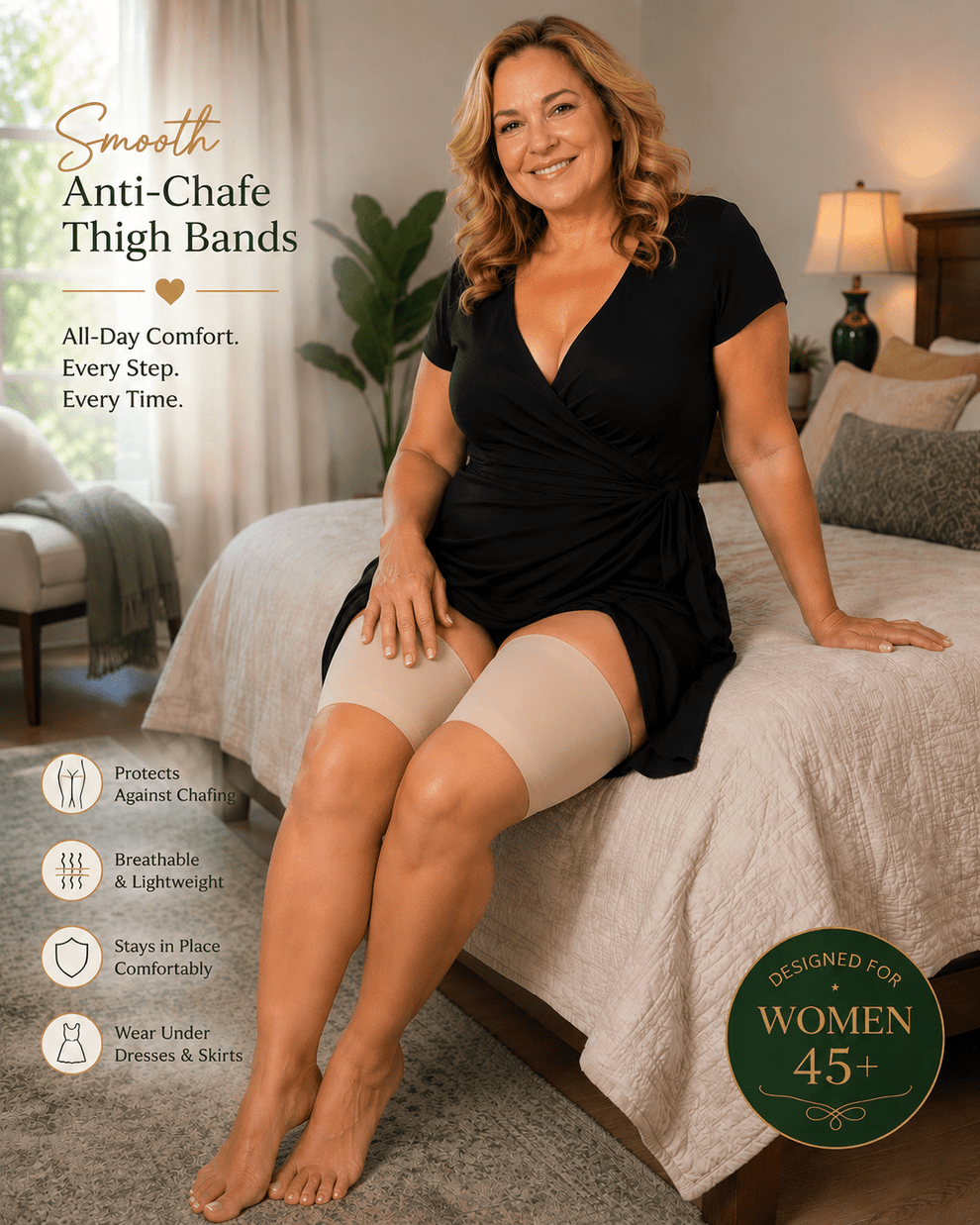
Smooth Anti-Chafe Thigh Bands
A light, breathable band that sits invisibly under the dress and keeps friction off your skin from the first step to the last — nothing to reapply or adjust once your day is underway.
Shop Smooth Anti-Chafe Thigh BandsAnd if the size isn't right, you keep the original pair and we send a replacement free — so a first try carries no risk.
Frequently Asked Questions
What does anti-chafing mean?
"Anti-chafing" means designed to prevent chafing — the skin irritation caused by repeated rubbing. How that protection actually works on the thighs, and which type suits which day, is covered in full above.
What does anti-chafe mean on clothing?
On clothing, "anti-chafe" means the item is built to stop the skin rubbing that causes irritation. The differences between bands, shorts, and fabrics — and when each one is the better choice — are explained in the sections above.
Are anti-chafing bands the same as shapewear?
No. Shapewear is designed primarily for shaping or compression. Anti-chafing bands are designed primarily to reduce friction between the thighs.
Can anti-chafing bands be worn under dresses?
Yes. They are commonly worn underneath dresses and skirts where thigh friction may occur.
Are anti-chafing bands only for summer?
No. They can be worn year-round whenever friction becomes uncomfortable, although they are most commonly associated with warm-weather dress wear.
Are anti-chafing bands only for plus-size women?
No. Women of many body types experience thigh friction. The issue is influenced by movement, anatomy, clothing, weather, and activity levels rather than body size alone.
Why do women wear anti-chafing bands?
Most women wear them to improve comfort while walking, traveling, attending events, or spending long periods in dresses.
How are anti-chafing bands different from slip shorts?
Anti-chafing bands sit only on the upper thigh and target friction specifically. Slip shorts extend further down the leg and serve a broader coverage purpose. See the full comparison in Related Resources below.