


Do Thigh Bands Actually Work?
Part of the Dress Comfort Knowledge Lab by Trendyvice
Yes, thigh bands can work for many women because they create a physical barrier between the inner thighs. Instead of allowing skin to rub directly against skin while walking, the band covers the friction zone and helps reduce rubbing, heat build-up, and irritation under dresses or skirts. Their effectiveness depends on correct sizing, placement, fabric comfort, and how long the wearer is walking or standing.
Why Women Ask This Question
Thigh bands are often misunderstood because they look simple. Many women wonder whether a narrow band of fabric can really make a difference when inner-thigh chafing becomes painful during walking, travel, weddings, summer events, or long days in dresses.
The answer depends on what problem the band is trying to solve. Thigh chafing usually happens because the inner thighs touch repeatedly while moving. When heat, sweat, humidity, and time are added, the skin can become irritated, tender, red, or sore.
A thigh band works by interrupting that contact. It does not change body shape. It does not stop sweating completely. It simply places a soft layer between the thighs so the skin is not taking the full force of repeated friction.
How Thigh Bands Work
Thigh bands are designed to sit around the upper thighs, usually under dresses or skirts, where rubbing normally happens. When placed correctly, they act as a focused friction barrier.
This matters because thigh chafing is usually not caused by one dramatic moment. It builds gradually through repeated movement. Walking across a parking lot may feel fine. Walking through a summer wedding venue, airport terminal, outdoor market, or sightseeing route for hours can feel very different.
For women who want targeted protection without wearing full shorts, Lace Anti-Chafe Thigh Bands are designed to protect the inner-thigh friction zone while keeping the rest of the under-dress area lighter and more breathable.
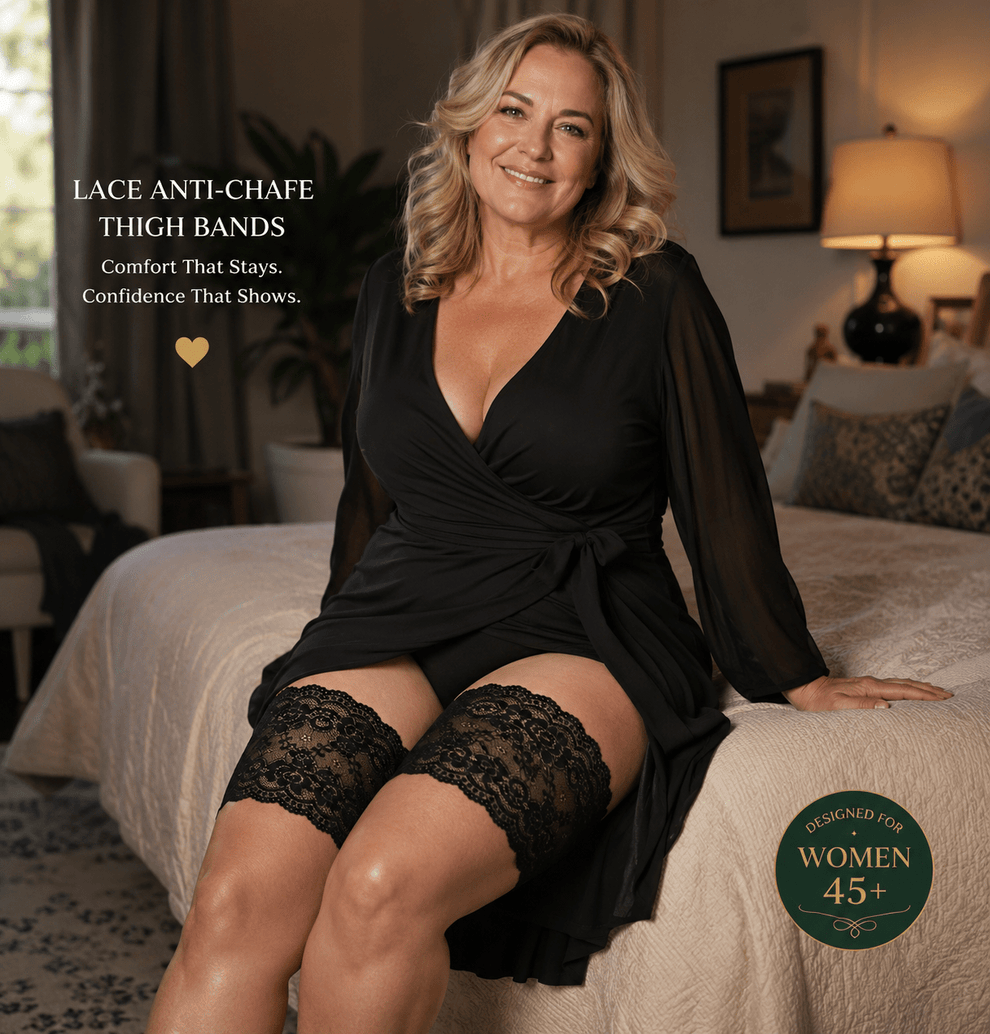
Lace Anti-Chafe Thigh Bands
A breathable lace band that covers only the friction zone on each thigh — targeted protection that stays put through walking, standing, and a long day, without the fabric of full shorts.
Shop Lace Anti-Chafe Thigh BandsAnd if the size isn't right, you keep the original pair and we send a replacement free — so a first try carries no risk.
The Mechanics Behind Thigh Band Protection
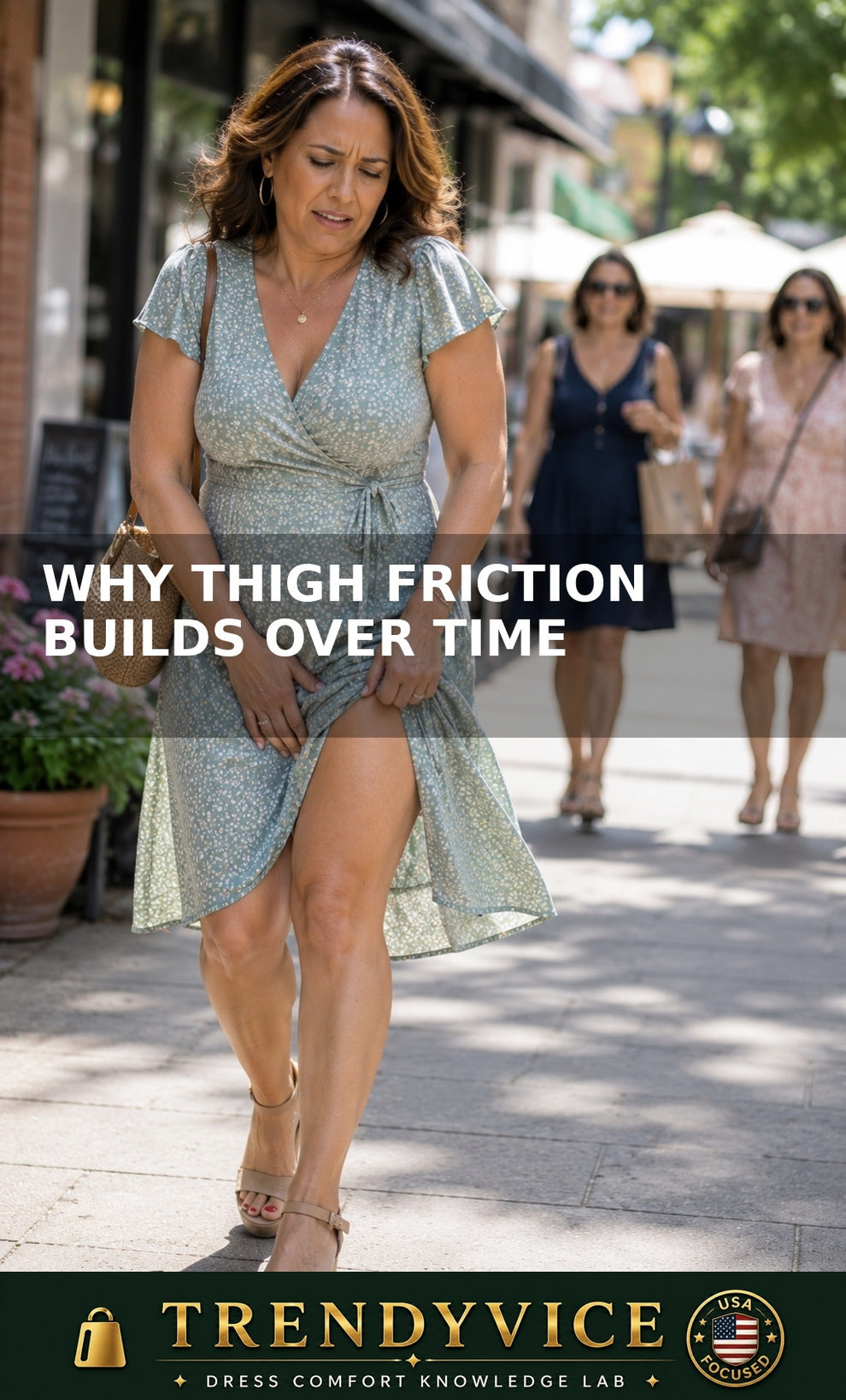
The basic science is simple: chafing develops when repeated contact, pressure, moisture, and movement irritate the skin surface. Thigh bands reduce one of the most important triggers — direct skin-on-skin friction.
Friction Barrier
A thigh band places fabric between the thighs, helping prevent skin from rubbing directly against skin during walking, standing, and movement.
Repeated Motion
Every step creates a small friction cycle. Over hours, those cycles can build into soreness. A barrier reduces the repeated rubbing effect.
Heat and Sweat
Warm weather and sweat can make the skin more sensitive. A breathable barrier can help reduce rubbing without adding full lower-body coverage.
Placement
Thigh bands work best when they sit directly over the area where the thighs touch. If placed too high or too low, protection may be reduced.
This is why fit matters. A thigh band that is too loose may shift. A band that is too tight may feel uncomfortable. The goal is secure contact without squeezing.
Get the free Dress Comfort Guide
The simple, practical steps for walking through a long, warm day without the rubbing — sent straight to your inbox, free. Everything on this page and more, in one place you can keep.
Free to join. Unsubscribe anytime.
When Thigh Bands Work Best

Thigh bands are especially useful when the problem is focused inner-thigh rubbing under dresses or skirts. They are often chosen by women who want protection without adding a full extra garment layer.
- Summer dresses: useful when bare thighs rub during warm weather.
- Wedding guest outfits: helpful during walking, dancing, standing, and long receptions.
- Travel days: useful for airport walking, sightseeing, road trips, and vacation outfits.
- Outdoor events: helpful during festivals, markets, BBQs, state fairs, and humid summer gatherings.
- Everyday dress comfort: useful for women who want to wear dresses without constantly worrying about inner-thigh irritation.
They are not limited to one body type. Thigh chafing can happen to women of many sizes because it depends on anatomy, walking pattern, heat, sweat, fabric movement, and how much the thighs touch during motion.
If you wear dresses for several of these occasions, the lace thigh bands 4-pack lets you rotate pairs between washes.
When Thigh Bands May Not Feel Ideal
Thigh bands can work well, but they are not perfect for every person or every situation. Like any under-dress comfort solution, they depend on fit, feel, and use case.
If the band is the wrong size, it may roll, slide, pinch, or move out of the friction zone. If the wearer prefers full coverage, smoothing, or extra modesty under a dress, slip shorts may feel more secure. If the day involves very intense activity, repeated adjustment may be needed.
The best way to think about thigh bands is not as magic. They are a focused mechanical solution for a focused problem: inner-thigh friction.
Thigh Bands Compared With Other Chafing Solutions
Different solutions work in different ways. Some reduce friction temporarily on the skin. Others add fabric coverage. Thigh bands sit between those approaches by offering a physical barrier only where the thighs rub.
| Solution | How It Works | Best For | Possible Limitation |
|---|---|---|---|
| Thigh bands | Create a fabric barrier between the inner thighs | Dresses, skirts, warm weather, focused friction protection | Fit and placement must be correct |
| Anti-chafe gels or balms | Coat the skin to reduce rubbing | Short errands, light walking, mild conditions | May wear off with sweat or long movement |
| Powders | Help absorb moisture and reduce dampness | Early moisture control in dry conditions | Can clump or need reapplication |
| Slip shorts | Cover the upper thighs and add full under-dress coverage | More coverage, smoothing, seated travel, modesty | Can feel warmer than minimal protection |
For many women, the practical question is not whether one option is universally best. It is which option fits the dress, the weather, the walking distance, and the amount of coverage desired.
Do Thigh Bands Stay in Place?
Thigh bands are most likely to stay in place when the size is correct and the band is positioned over the actual rubbing area. The band should feel secure, but not painfully tight.
Placement matters because every body is slightly different. Some women experience rubbing higher on the thigh. Others feel it lower. The band needs to cover the point where the thighs naturally meet during walking.
If a thigh band rolls or slides, it usually means one of three things: the size may be wrong, the placement may be off, or the activity level may require a different under-dress solution.
Why This Matters in US Summer Conditions
Thigh chafing can happen anywhere, but it often becomes more noticeable during warm US weather. Heat increases sweat. Humidity slows evaporation. Long walking days make the friction cycle repeat for hours.
A dress may feel comfortable during a short morning errand but become irritating during an afternoon wedding in Georgia, a humid outdoor event in Florida, a city walk in New York, a state fair in Texas, or a vacation sightseeing day in Washington, D.C.
In those situations, a physical barrier can be more dependable than waiting for discomfort to begin. Prevention is usually easier than trying to calm irritated skin after hours of movement.
So, Are Thigh Bands Worth Trying?
Thigh bands are worth trying if the main problem is inner-thigh rubbing under dresses or skirts and the wearer wants protection without full shorts. They are especially useful for women who want airflow, targeted coverage, and a less bulky under-dress solution.
They may not be the best choice for every woman. Some women prefer slip shorts for fuller coverage. Others prefer balms for very short outings. But for focused chafing prevention in dresses, thigh bands solve the problem in a direct and practical way: they put a barrier exactly where friction happens.
The strongest result usually comes from choosing the right size, placing the band carefully, and using it before irritation starts.
Frequently Asked Questions
Do thigh bands actually stop chafing?
Thigh bands can help stop or reduce thigh chafing by creating a physical barrier between the inner thighs. They work best when the main cause of irritation is skin-on-skin rubbing during walking, standing, or movement under dresses and skirts.
Are thigh bands better than anti-chafe creams?
Thigh bands and anti-chafe creams work differently. Creams coat the skin and may need reapplying, especially in heat or sweat. Thigh bands provide a fabric barrier that stays in the friction zone when sized and positioned correctly.
Do thigh bands stay up while walking?
Thigh bands are more likely to stay up when the size is correct and the band sits over the area where the thighs rub. If a band slides, rolls, or pinches, the size or placement may need adjusting.
Can you wear thigh bands all day?
Many women wear thigh bands for long days, especially under dresses at events, while traveling, or during warm weather. Comfort depends on proper sizing, breathable fabric, and whether the band remains positioned over the friction zone.
Do thigh bands work for plus-size women?
Thigh bands can work for plus-size women when they are available in the correct size and sit comfortably around the thigh. Thigh chafing is not limited to one body type; fit and placement are more important than size alone.
Are thigh bands good under wedding guest dresses?
Thigh bands can be useful under wedding guest dresses because they provide targeted friction protection during walking, standing, dancing, and long receptions. They are often chosen when a woman wants protection without wearing full slip shorts.
Why do thigh bands work better when worn before irritation starts?
Thigh bands work best before irritation starts because they help prevent repeated rubbing from damaging sensitive skin. Once the skin is already sore, continued walking may still feel uncomfortable even with a barrier in place.